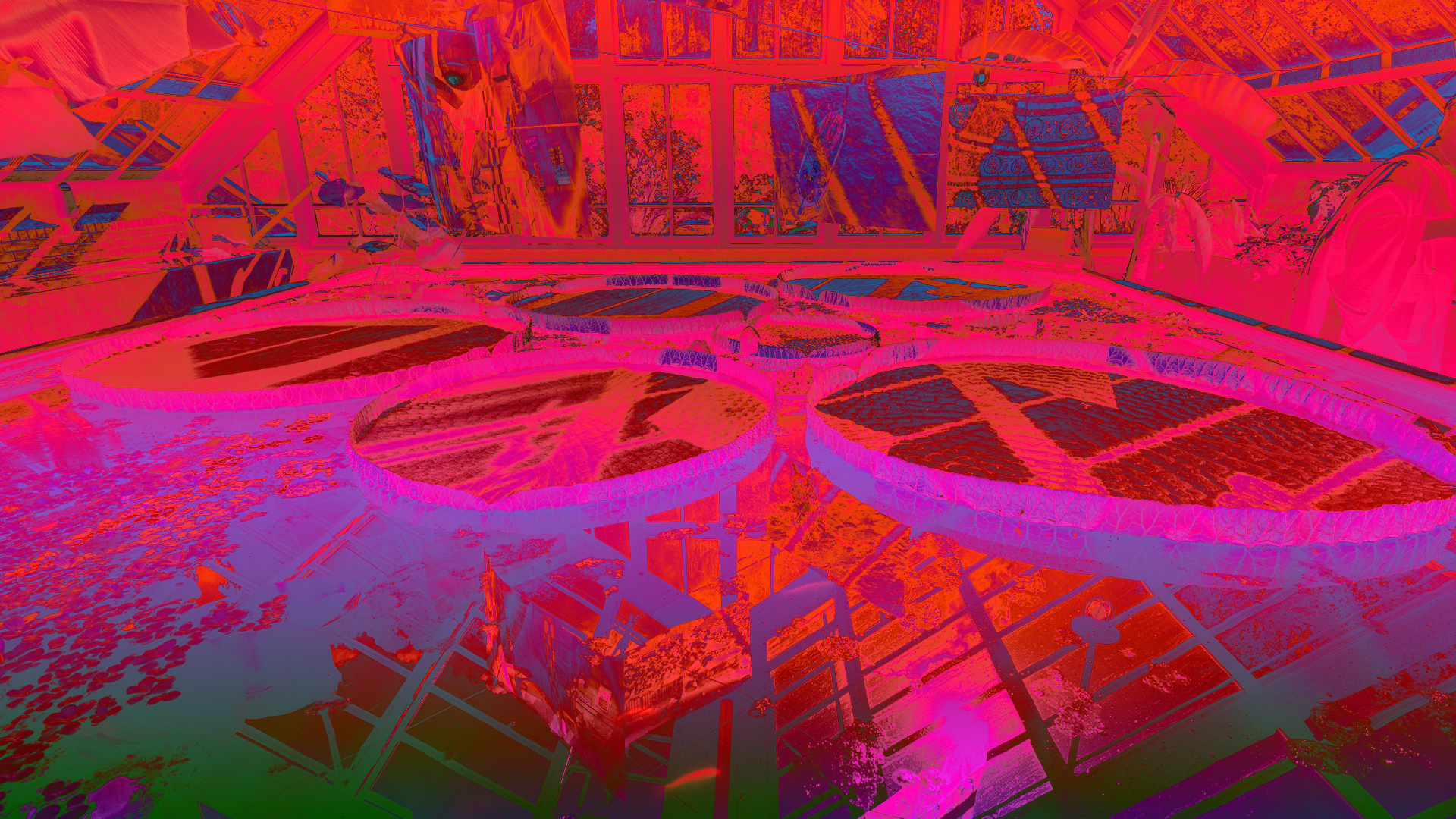
Resisting Waters reflects on the social, political, and spiritual aspects of water infrastructure in a four-day programme featuring sound installations, performances, and in-depth exploration. Including from Thursday 10 to Sunday 13 September installations in the Universiteitsmuseum Utrecht by Mariko Hori, Nischal Khadka & Merel Maan Galama. Click here for the full programme of Resisting Waters.
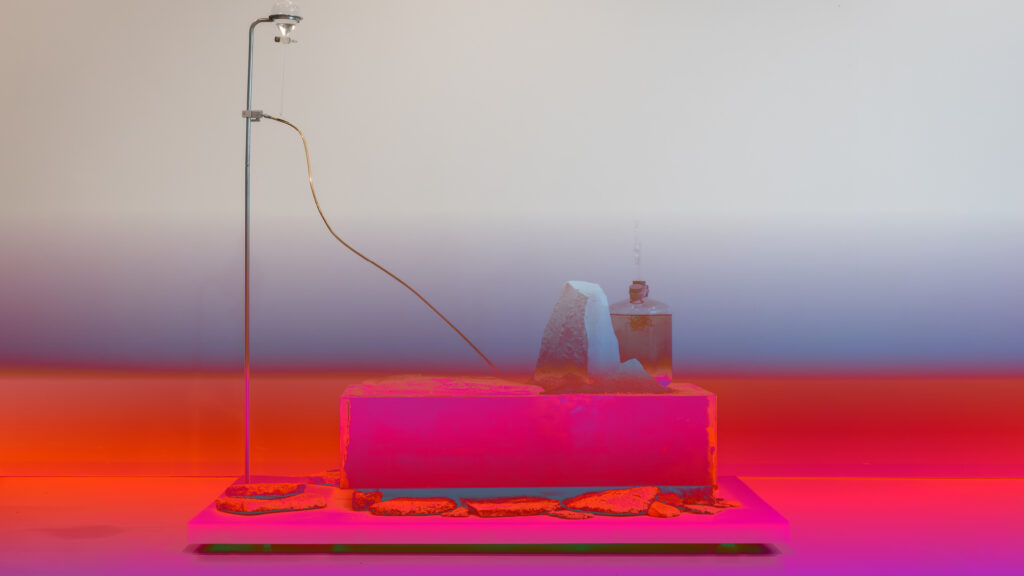
Mariko Hori – Forever in Different Ways
Forever in Different Ways is an interactive installation by Mariko Hori that imagines a world beyond environmental tipping points, where water no longer behaves as expected. Visitors offer droplets of water into a landscape that resists, redirects, and slowly transforms through their actions. Developed in collaboration with scientists from KWR Water Research Institute, the work forms a part of our installation programme Resisting Waters and reflects on uncertainty, ecological fragility, and the possibility of acting even when outcomes remain unpredictable.
Mariko Hori is a Japanese-Dutch multidisciplinary artist based in Amsterdam, working across installation, performance, and socially engaged, research-based practices. Trained in architecture, she creates spatial works that deliberately blur boundaries between human and more-than-human worlds, exploring existence as something formed through relations rather than as a fixed state. Water has become central to her recent thinking – as both material and metaphor, something that archives history while eluding clear definition.
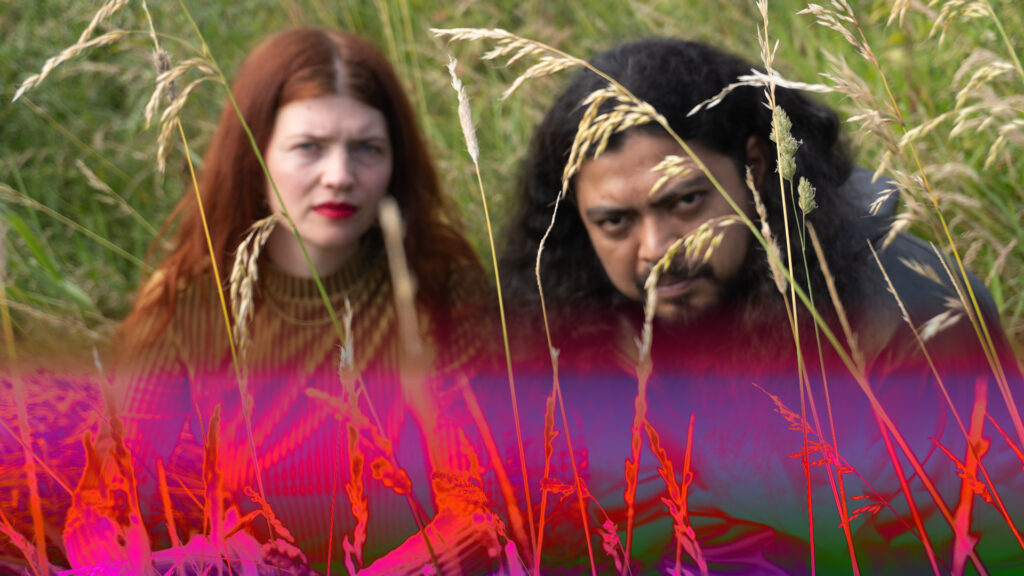
Nischal Khadka & Merel Maan Galama – Sacred Ecohydrology
Sacred Ecohydrology by Nischal Khadka and Merel Maan Galama is a sound installation on display from Thursday to Sunday at the Universiteitsmuseum Utrecht, guided by a listening encounter on Sunday, developed during an artist residency as part of our installation programme Resisting Waters.
Khadka grew up in eastern Nepal near Saptakoshi (“seven rivers”), one of the most unpredictable river systems where water reshapes landscapes and carries ecological, spiritual and indigenous histories. Growing up in the Netherlands, Galama observed how water is managed through an engineered landscape shaped by centuries of flooding. From these backgrounds, the work delves into water landscapes, bringing Himalayan river cosmologies into dialogue with Dutch engineered water systems.
Among the field research a water creature emerges, doomed as invasive. Characterised as aggressive. Labeled as disruptive. The impact of this creature results in massive ecological damage or a testimony to water as a living relation with the irony of the depth of life and survival. The gathered field recordings of ditches, canals, rivers, wetlands, pumps, sluices and submerged environments reveal how listening can acknowledge the tensions between coexistence and control.
Nichal Khadka and Merel Maan Galama were selected from an Ulysses Open Call, in collaboration with Residenties in Utrecht and the University Museum. This residency is part of the Ulysses Platform, co-funded by the European Union.
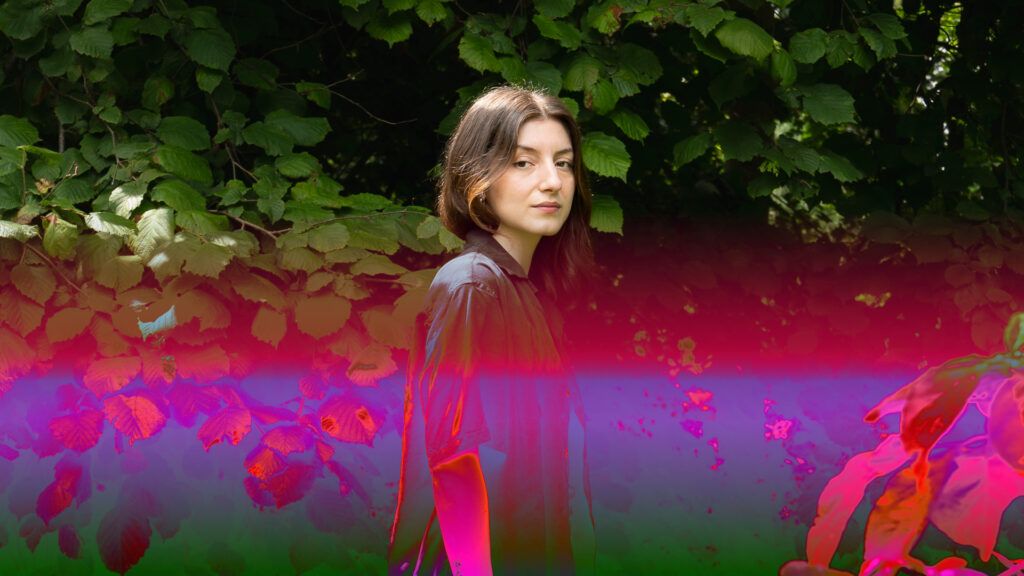
Yonca Yildirim – Ecotone
For our installation programme Resisting Waters, Yonca Yildirim brings her research series Ecotone into the greenhouse of the Oude Hortus. The installation works with the greenhouse as architecture, its machinery, its symbiotic relation between plants and water, integrating these as active components. Sculptures engage with the materiality and perception of water, placed in direct relation to the living ecosystem of the space. A sound composition weaves together field recordings, pointing to the interconnectedness of ecosystems.
Yonca Yildirim, based in Cologne, works in the fields of installation, sculpture, photography and sound. Her practice is rooted in the material and the contingent nature of sound and its emergence through the encounter of surface, form, environment and perception. Working with materials such as metal, glass, ceramics, ice or wax that carry and transmit meaning through their physical properties, she explores how sound exists in layers within any environment, activated through transformation and encounter. Through expanded listening practices, she attends to what exists outside the threshold of human perception.
Photo © Eva Świątkowski
Stijn Demeulenaere – Zijlijn / Linea Lateralis
In the North Sea, under water, sight is limited, often just a few meters. Sound, however, travels much much further under water. The underwater world is a true sonic world, a language that is often beyond comprehension to us. The North Sea is also one of the busiest seas in the world. Almost every inch of it knows some form of human occupation. Therefore the North Sea is one of the loudest in the world: full of noises from the countless ships, but also from drilling, oil rigs, the construction of wind farms, fishing, and fish farms. How these sounds might affect wildlife, is still being researched.
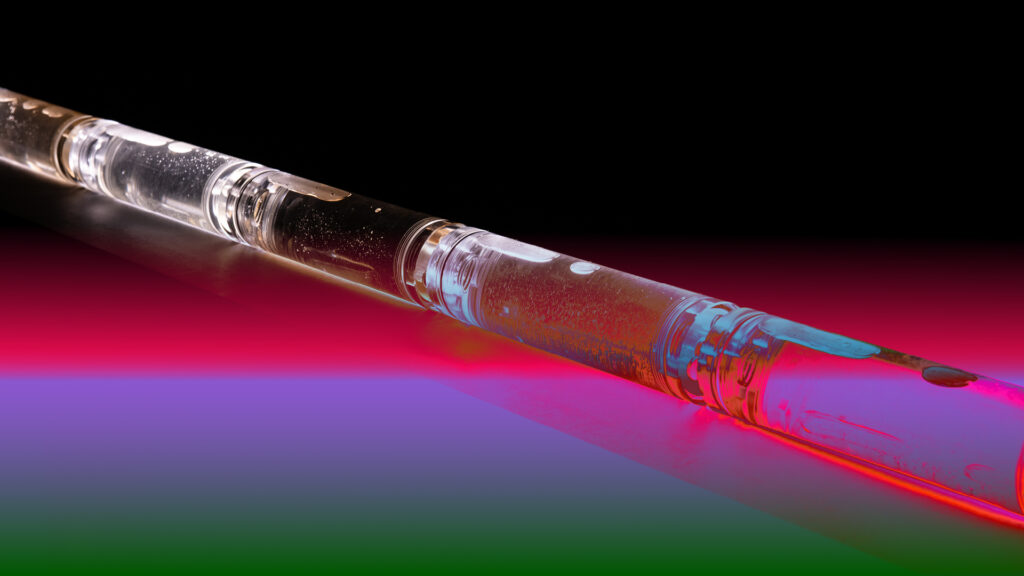
Zijlijn / Linea Lateralis by Stijn Demeulenaere, an award-winning sound artist from Belgium with a background in sociology, journalism and radio, is an artistic research into the relationship between the biophony (sound made by marine life) and the anthropophony (sound springing from human activity). Underwater sound recordings at the southern and northern borders of the North Sea are played through 6 speakers, confronted by 9 seawater samples from the recording locations, held in plexi containers, evoking the envelopment of the sea in an ocean of noise.
CREDITS
Anders Bibow Olsen, Kjetil Høidal, Kevin Trappeniers, Ioana Mandrescu, Julien Ortuno – recording assistants
Noise maps courtesy of JOMOPANS
Commissioned by Concertgebouw Brugge. Conceived, Created & Composed by Stijn Demeulenaere. Produced by Kunstenwerkplaats VZW, in co-production with Concertgebouw Brugge and iMAL – Art Center for Digital Cultures & Technology, in collaboration with STUK – House for Dance, Image & Sound, Lydgalleriet Bergen and Zsenne Art Lab.
Supported by The Flemish Community and The Flemish Community Commission of the Brussels Region.
Photo © LNDWstudio